Why Pubs and Hotels Are Britain's Best EV Charging Estate

James Foster • May 24, 2026

Share this article

So here is the thing about hotel and pub car parks. They sit empty when they shouldn't, they fill up when they should be earning and almost nobody who owns them is sweating the asset the way they should.

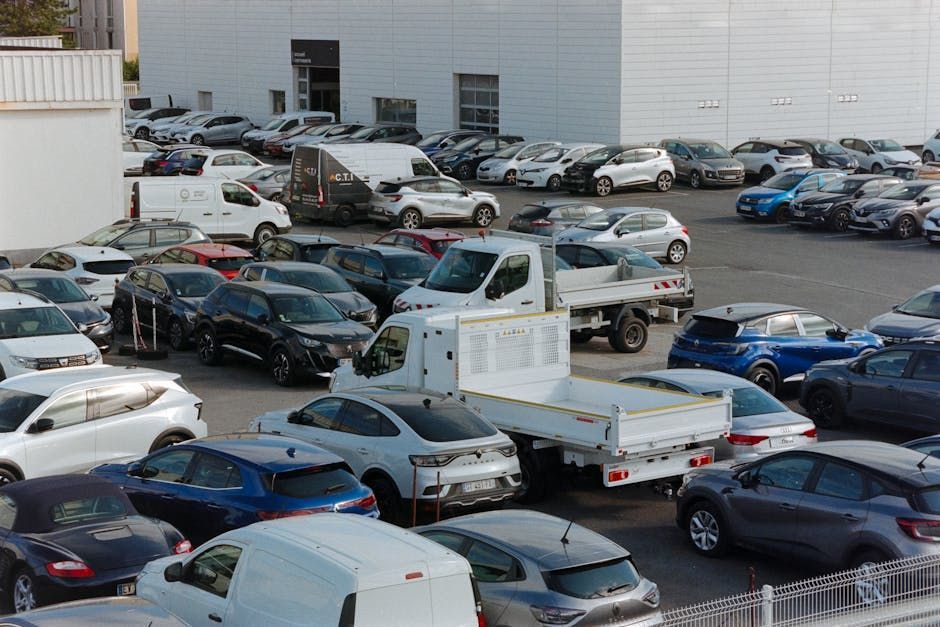
Think about a Premier Inn off junction 23 of the M6. Eighty spaces. Between eleven in the morning and five in the afternoon the place is half empty, then the diners and overnighters roll in and from six in the evening to ten the next morning the entire car park is full of cars sitting there doing absolutely nothing. Same story at any Wetherspoons with a car park, any Marston's roadside pub, any Greene King with rooms above. The estate is enormous, the dwell times are some of the longest in retail and almost none of it has working chargers.

Which is mad really. Because the maths is so obviously in favour.

The dwell time is the whole point

A motorway services charger gets a car for twenty minutes if you're lucky. A supermarket gets you for forty. A high street car park gets you for an hour and a half if the warden hasn't noticed.

A pub gets you for two hours over Sunday lunch. A restaurant gets you for two and a half on a Friday night. A hotel gets you for fourteen hours overnight. That is the dream charging profile and the industry has spent ten years building infrastructure everywhere except where it actually works.

If you're running a 200 site pub estate and your average ticket is creeping up because your customer spends an extra fifteen minutes inside while their car charges, that is worth a great deal more than the energy margin on the kilowatt hours. And the energy margin on the kilowatt hours is not bad either.

Why your operations director keeps saying no

The reason nobody has done this at scale is not because the maths is wrong, it is because the deployment route is broken.

Three things kill it every time. The capex bill, which lands at somewhere between forty and a hundred and twenty thousand a site once you add up the chargers, the trenching, the substation upgrade and the consultancy fees. The grid wait, which on most pub sites is somewhere between eighteen months and never because the DNO has bigger fish to fry than your 100 kilowatt connection. And the disruption, because no operations director wants the car park dug up over a long weekend in May when the beer garden trade is the whole point of the year.

So the proposal lands on the FD's desk and the FD does what FDs do, which is to put it in next year's pile and never look at it again.

What the FreeMe approach actually changes

This is where the containerised piece earns its keep. FreeMe is a battery and charger system in a standard ISO container, sized from 150kWh up to 3MWh. It rolls in on a lorry, gets craned onto a corner of the car park and runs off the existing supply trickling into the battery overnight when the site is quiet. No trenching. No substation. No DNO conversation. Live in a day.

The hybrid LTO and LFP battery chemistry inside, with the Toshiba SCiB cells handling the peak demand and the LFP doing the bulk storage, is what makes the off-grid model actually work commercially. The LTO absorbs the punishment of the fast charging cycles which is why we can put a ten year design life on the unit. Other people running pure LFP simply cannot.

For a 50 to 100 room hotel a 150kWh or 350kWh FreeMe with two heads is usually the right answer. For a destination pub with a hundred spaces a 350kWh unit. For a roadside services operator looking at a multi site rollout the 1MWh container is where the unit economics start getting interesting.

Leasing or EaaS, you pick what fits

PowerMe runs two commercial models for a reason. If you want to own the asset and keep the energy margin, lease it. Monthly payment, off balance sheet treatment available, the same way you finance any other piece of equipment in the estate. If you don't want capex, depreciation or operational headache anywhere near your books, take the Energy as a Service route. We fund the unit, we install it, we run it, you take a profit share on the energy sold and you get a working charger in your car park without spending a penny up front.

The reason both models matter is that pub groups, hotel chains and restaurant brands don't share one balance sheet between them. A privately held regional brewery treats capex very differently to a listed hospitality REIT. The point is that whichever side of that fence you sit on, there's a route to a working charger that doesn't involve a two year argument with the DNO.

So if you've got car parks sitting empty by day and full by night, you've got the best dwell time profile in British retail and almost certainly no chargers to monetise it. That is a problem worth fixing.

Get in touch: info@powerme.energy / +44 20 8050 8198 / www.powerme.energy

Recent Posts

By James Foster May 23, 2026
Business parks have thousands of staff cars and almost no chargers. PowerMe FreeMe drops in on EaaS so the landlord pays nothing and earns a profit share.
By James Foster May 22, 2026
Exhibition halls fill for one week in twelve. Static EV chargers gather dust between events. Mobile rapids and off-grid containers fix the maths.
By James Foster May 21, 2026
British festivals talk green but burn diesel by the tanker load. LTO battery power finally makes silent, zero-emission festival energy commercially viable.
By James Foster May 20, 2026
UK energy retailers want B2B EV charging revenue but the DNO holds the queue. PowerMe FreeMe and TitanMe Max deploy off grid with no trench, no wait.
By James Foster May 19, 2026
Retail park tenants want EV chargers and the landlord gets the capex bill. PowerMe FreeMe drops in off grid on EaaS, no trench, no DNO, profit share back.
By James Foster May 18, 2026
Electric boats from Candela, X Shore and Vita need more than a 16 amp pedestal. PowerMe TitanMe and FreeMe deliver marina charging that ships in days not years.
Show More