

The Powerful Charge Companion

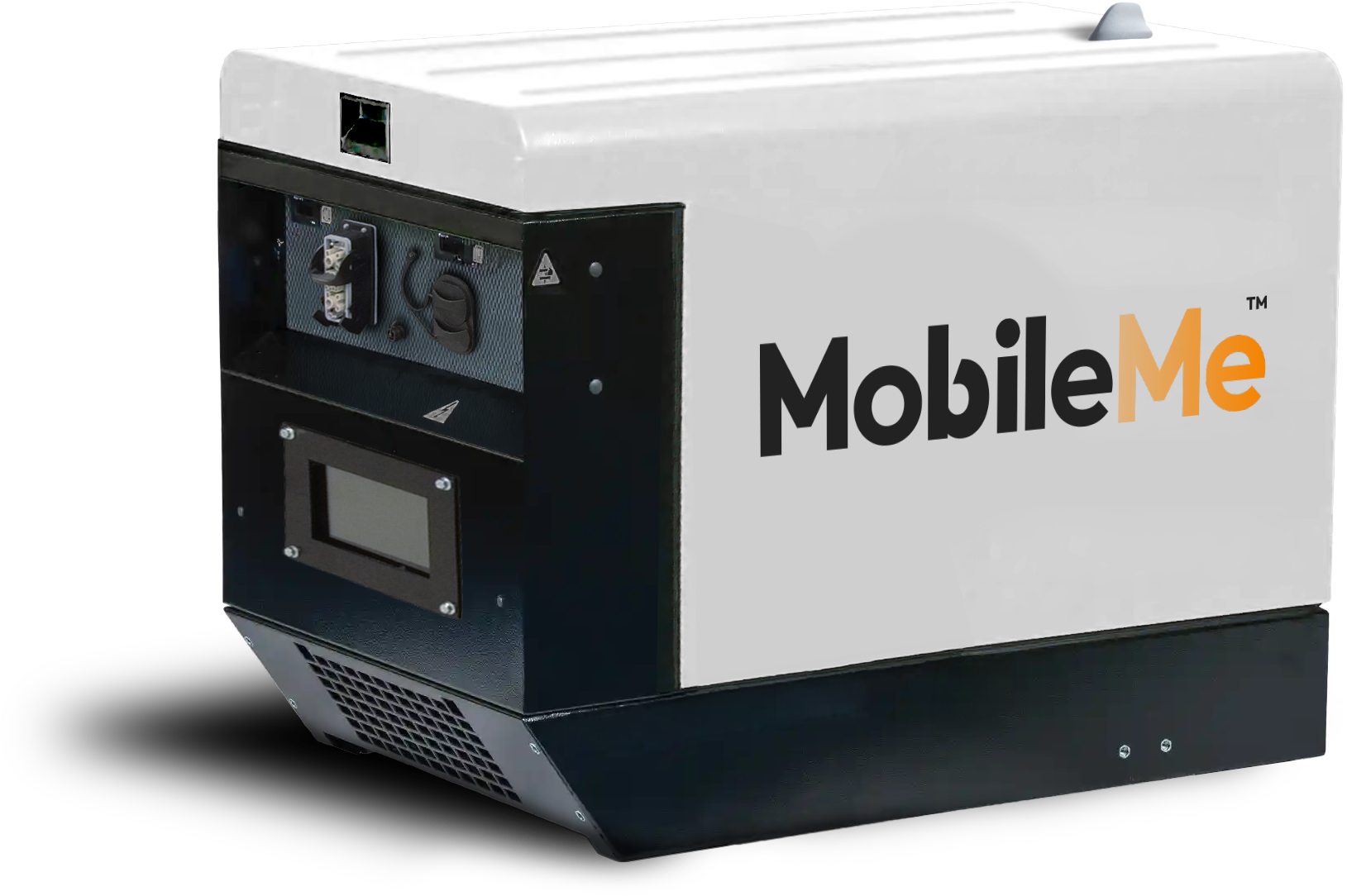
MobileMe is a compact, intelligent power solution specifically designed to mount easily on or underneath recovery trucks. Equipped with a durable 12kWh LTO battery and a single charge head, it delivers a rapid 40kW charge rate to provide efficient, on the go power delivery. Backed by an intelligent architecture for optimised performance, MobileMe also offers unmatched convenience by allowing operators to conveniently recharge the unit at any standard street charger.
The electric petrol can.
Recovery truck mounted, ultra fast cycling.

12kWh LTO Battery

One Charge Head

Charge Rate 40kW

Fits On or Under Recovery Trucks

Intelligent Architecture
Charge at Any Street Charger
12kWh LTO Battery
One Charge Head
Charge Rate 40kW
Fits On or Under Recovery Trucks
"One incorrect tow. One damaged battery rail. $28,000."
Ford Mustang Mach-E owner, via InsideEVs
MobileMe 0.3 FAQ
The electric petrol can. Recovery truck mounted, ultra fast cycling.
What is MobileMe and why do recovery operators need it?
MobileMe is an 11.5kWh portable battery unit delivering 40kW of charging output, designed to mount directly onto a recovery truck. When an EV runs out of charge, you cannot simply tow it. Most electric vehicles cannot enter transport mode without battery power and towing a dead EV on its wheels risks catastrophic damage to the electric motor and drivetrain, creating repair bills that dwarf the cost of a recovery callout. MobileMe gives the vehicle enough charge to drive itself to the nearest charger. It is literally the electric petrol can.
How quickly can MobileMe charge a stranded EV?
MobileMe delivers 40kW of DC charging power which is enough to give most EVs 20 to 40 miles of range in around 15 to 20 minutes. That is sufficient to reach the nearest rapid charger in virtually every scenario. The unit is not trying to fully charge the vehicle, just get it moving again. Arrive, plug in, wait and the driver is on their way.
How fast does MobileMe recharge itself between jobs?
This is where MobileMe's LTO battery chemistry makes all the difference. At a standard rapid charger, MobileMe can recharge from empty to full in approximately 12 to 15 minutes. Conventional LFP batteries would take an hour for the same capacity. That means a recovery operator using MobileMe can complete significantly more callouts per shift than anyone using standard battery technology. The fast recharge is not a nice to have, it is the difference between a viable business model and a marginal one.
Why can you not just tow a dead EV?
An EV with a flat battery presents a genuine problem. Without power, most vehicles cannot disengage their parking mechanisms or enter neutral. The electric motor is permanently connected to the wheels through a fixed ratio gearbox, meaning towing on the wheels generates back EMF through the motor which can damage the inverter and motor windings. Flatbed recovery is an option but it requires a larger vehicle, takes longer and costs more. MobileMe solves the problem at source by giving the car enough energy to drive itself.
How many recovery jobs can MobileMe handle per shift?
In a typical 10 hour shift, factoring in travel time, charging time at the vehicle and recharge stops, MobileMe can realistically handle 8 to 11 recovery callouts. Each job takes approximately 15 to 20 minutes at the vehicle and the unit recharges in under 15 minutes. Compare that to an LFP based alternative that would manage perhaps 4 to 5 jobs due to the hour long recharge requirement between each deployment.
What charging connectors does MobileMe support?
MobileMe supports CCS (Combined Charging System) which covers the vast majority of electric vehicles sold in the UK and European markets. The unit is OCPP 2.0.1 compliant and managed through the PowerMe AI platform which handles session authentication, billing and vehicle communication protocols automatically.
How does the leasing model work for MobileMe?
MobileMe is available exclusively through leasing. A fixed monthly fee covers the unit, the AI management platform, software updates, maintenance and a 10 year battery warranty. There is no capital outlay and the battery remains PowerMe's responsibility throughout the contract. For a recovery operator, MobileMe becomes a revenue generating tool from day one rather than a depreciating capital asset.
