The Car Dealer EV Problem: You Cannot Demo What You Cannot Charge
So picture the scene. A customer walks into a Mercedes dealership somewhere in Reading on a Saturday morning, they are properly sold on the EQS, they want a test drive and the salesperson walks them out to the forecourt where the demo car has been sitting for three days. They open the door, fire it up and the dashboard says eleven per cent. Now what?
That, in miniature, is the car dealer EV problem. And it is not going away because the cars are coming whether the infrastructure is ready or not.
A forecourt full of EVs and not a charger in sight
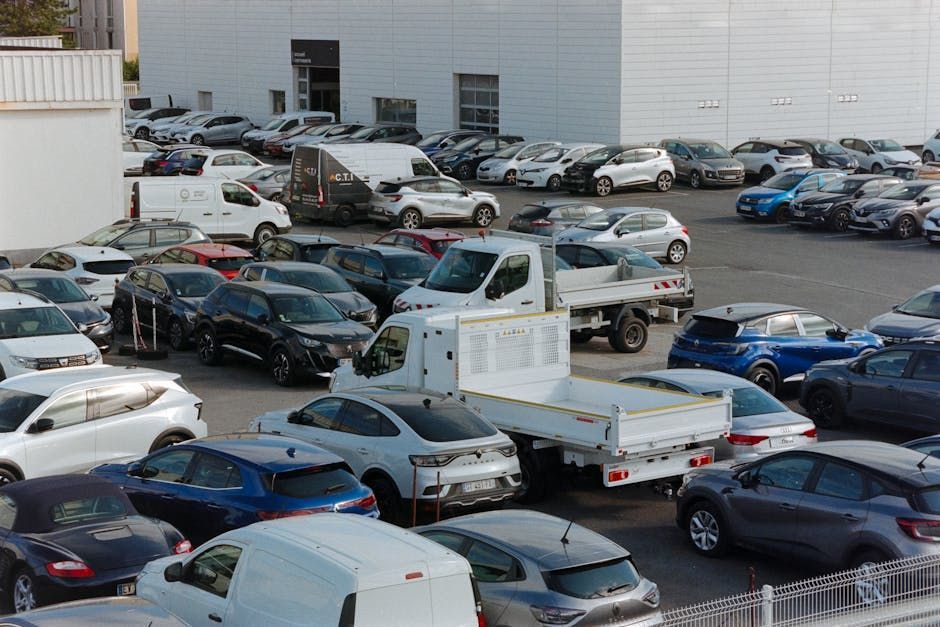
Walk round most British franchised dealerships today and you will see a curious thing. Half the stock on display is electric. Polestar 4s, BMW iX1s, the new wave of Stellantis EVs from the Peugeot e-3008 to the Vauxhall Grandland Electric and increasingly Chinese brands pushing in alongside them. The marketing is all about zero emissions and pence per mile and yet the cars themselves are sitting on a tarmac apron that has, at best, two 7kW outlets at the back of the workshop next to the bins.
Tesla solved this years ago because Tesla is vertically integrated and built its own charging into every dealership from day one. Everybody else inherited a problem. The dealer estate was designed for petrol, the parking layout was designed for petrol, the workshop was designed for petrol and someone has now bolted EV onto the side of it and asked everyone to make it work.
The result is dealers who are fundamentally selling a product they cannot demonstrate at full strength. Demo cars run flat. PDI cars get handed over at sixty per cent because there was no time to charge them. Used EVs sit on the back of the lot bleeding range while waiting for a buyer. None of this is great for conversion.
Why fixed chargers only solve half the problem
The instinct is to put in static chargers and call it done. And to be fair, plenty of groups have. Lookers, JCT600, Marshall Motor Group and Inchcape have all announced infrastructure programmes over the last couple of years. The trouble is twofold.
First, the grid connection. If you want a couple of 50kW DC chargers on a typical dealership site, the District Network Operator queue is somewhere between eighteen months and three years depending on which corner of the country you are in. Some sites have been told it is not happening at all without a substation upgrade the dealer is expected to pay for. So the chargers go in at 22kW AC, which is eight hours from twenty to eighty per cent. Useful for an overnight, useless for a Saturday afternoon demo.
Second, location. Even where dealers have got proper DC chargers fitted, they are usually tucked away at the back of the workshop or on a corner of the lot. The cars that need charging at any given moment are scattered across a five acre site. The PDI bay is over there, the valeting bay is over there, the demo lineup is at the front and the used pitch is round the back. Walking each car to the charger and walking it back is a full time job for somebody who could be selling.
Where TitanMe fits
TitanMe is our van mounted unit. Forty kilowatt hours of Toshiba SCiB lithium titanate cells, 150kW DC output, mounted on a Ford Transit or equivalent platform. It does one thing very well, which is drive over to the car that needs charging and put a useful chunk of range into it. From twenty to eighty per cent on most EVs in well under half an hour. No ground works, no DNO application, no tarmac dug up.
The commercial reality is that one TitanMe can comfortably cover a ten acre dealership site. The PDI team uses it in the morning to top up new arrivals, the sales team uses it in the afternoon to keep demos charged and the valeting team uses it in the evening to make sure handovers go out at full battery. For a multi site dealer group, it rotates between sites on a weekly schedule and pays for itself across two or three forecourts rather than one.
Plate it up in dealer livery, run it as a service vehicle on the books and it does not look out of place. We have customers running them in matching colours to the courtesy car fleet so the customer sees the same brand experience all the way through. It is a sales tool dressed as a van, which is exactly what most dealerships need right now.
The commercial bit
We lease TitanMe rather than sell it because the maths makes more sense that way for most dealers. Leasing puts it on an opex line rather than capex, which is the line your finance director cares about and it leaves you free to upgrade as the technology moves on. We handle the maintenance, the software updates and the warranty. You handle selling cars.
The simple test most dealer principals run is whether one extra deal a month covers the lease cost. The answer is yes, comfortably. The harder question to answer is what the cost is of customers walking out because the demo had no charge, or PDI getting handed over at sixty per cent, or used EV residuals dropping because the cars sat with empty batteries for a fortnight. Nobody has done the maths on that yet but the number is not small.
The cars are coming. The grid is not. And in the meantime there is a perfectly serviceable van that drives over and charges the car. The whole thing is not actually that complicated.
Get in touch: info@powerme.energy / +44 20 8050 8198 / www.powerme.energy