Forecourts Have the Land, the Footfall and the Wrong Energy

James Foster • May 28, 2026

Share this article

So here is the thing about petrol forecourts in Britain. They sit on the busiest corners of the busiest roads, they already have the planning consent, they already have the canopy, the lighting, the CCTV, the till, the Costa concession and a queue of drivers spending money. What they do not have, in any meaningful sense, is electric charging. And the reason they do not have it is not because they do not want it. It is because the local DNO has either said no, said yes but in 2028, or quoted a number that would make any sensible operator quietly put the file back in the drawer.

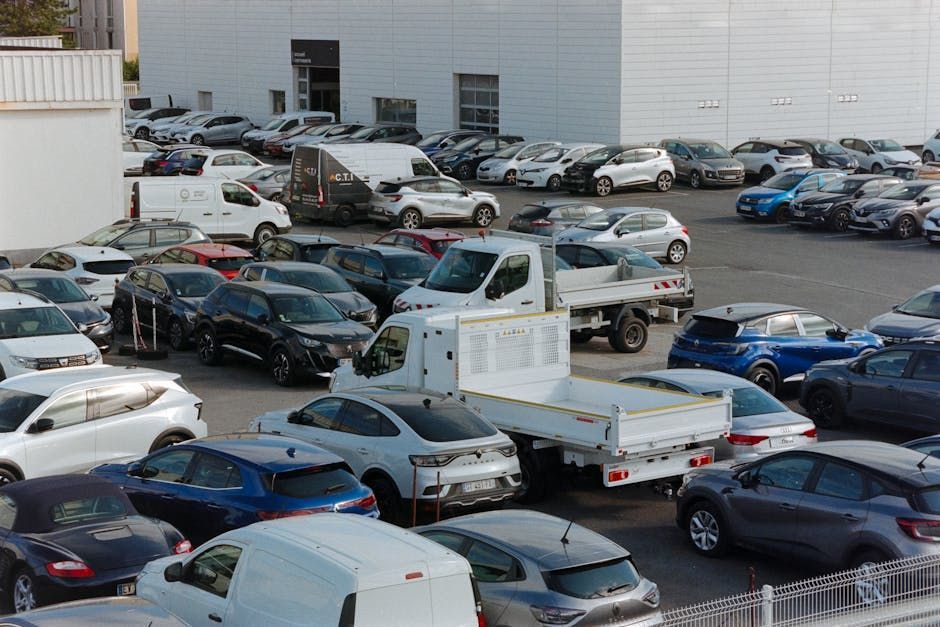
There are still around 8,300 forecourts left in the UK after twenty years of closures. The big operators (MFG, EG Group, Applegreen, Asda, Sainsbury’s, Tesco, Shell, BP) are doing the visible work — flagship sites off the M4, the odd hub on the A1, GRIDSERVE’s electric forecourts grabbing the headlines. Most independents and most of the smaller branded sites are nowhere. The question is not whether forecourts should add EV charging. The question is what to do when the wires arriving at your boundary cannot carry it.

The grid problem at a typical petrol forecourt

Right. A petrol forecourt typically has a connection somewhere between 100 and 250 kVA, sized historically for the kiosk, the pumps, the canopy lights, the freezer, the coffee machine and not very much else. The entire electrical load of the site is roughly what one decent rapid charger draws when an EV6 plugs in for fifteen minutes.

To put six 150 kW rapid chargers on a forecourt the way the marketing brochures suggest, you need around 900 kW of grid capacity. You will not have it. You will need a new substation, a deeper cable run from the primary, possibly a road dig, and a queue at the DNO that runs eighteen months in the worst districts. Reinforcement quotes north of £400,000 are routine, and that is before the civils and the canopy and the chargers themselves.

That is the problem in a sentence. The site is perfect. The tarmac is laid. The toilets exist. The coffee is hot. The grid says wait.

What FreeMe actually does on a forecourt

The FreeMe containerised unit (the PM 0.1 range) drops onto the existing tarmac with no ground works and no DNO queue. The 20ft variant carries 1MWh of hybrid LTO/LFP storage and four charging heads, draws its top-up power slowly through your existing connection overnight when the forecourt is quiet, and then discharges fast during the day when cars want 80% in fifteen minutes.

The maths is the bit operators actually care about. On a 250 kVA connection you can trickle the FreeMe at roughly 150 kW continuous through the off-peak window, which puts more than a megawatt-hour into storage between eleven at night and six in the morning. That is twelve to fifteen full rapid charges sitting on the forecourt before breakfast, ready for the morning commute, with your existing grid connection untouched and no reinforcement bill. The kiosk keeps running. The Greggs oven keeps running. Nothing on site fights the chargers for amps.

For smaller independent sites, the TitanMe Max (PM 0.2, 100 kWh, 200 kW DC) is the bridge product. Drop it on the pump island, plug into the existing 22 kW commando socket, and you have a 200 kW rapid running off a connection that would not normally support one. It is the cheapest way for a single-pump rural forecourt to start earning EV revenue while it works out whether to upsize.

The commercial bit, in plain English

Two ways to fund it. Lease the FreeMe and own the energy margin (lease payments fixed, revenue yours, simple) or take it on Energy as a Service, where PowerMe funds and owns the asset, you provide the tarmac and the footfall, you get a profit share and zero capex on the balance sheet. The EaaS route is the one most independent forecourt operators will land on, because EV charging is a new game and nobody wants to bet capex on a hand they have not played yet.

Both routes use the same kit. Both routes sidestep the same eighteen-month DNO cycle. Both routes get a working forecourt EV proposition live in weeks rather than years. And both routes mean the petrol pump and the rapid charger can sit ten feet apart on the same forecourt, sharing the kiosk, sharing the queue, sharing the coffee, which is the only commercial model that actually makes sense for the next decade while the country gets on with the transition.

The forecourts that move first will own the EV traffic on their roads. The ones that wait for the DNO to ring back will not.

Get in touch: info@powerme.energy / +44 20 8050 8198 / www.powerme.energy

Recent Posts

By James Foster May 27, 2026
UK port operators want electric ferries, tugs and handlers but the quayside grid was sized for a tea urn. PowerMe FreeMe and TitanMe Max drop in off grid.
By James Foster May 26, 2026
Airport long stay parks have the longest dwell times in Britain and almost no EV chargers. PowerMe FreeMe drops in off grid on EaaS, no DNO, no capex bill.
By James Foster May 25, 2026
Britain's supermarkets have ninety minute dwell times and almost no working chargers. PowerMe FreeMe drops in off grid on EaaS, no trench, no capex bill.
By James Foster May 24, 2026
Pub estates and hotel car parks have Britain's longest dwell times and almost no working chargers. The containerised FreeMe approach fixes that without trenching.
By James Foster May 23, 2026
Business parks have thousands of staff cars and almost no chargers. PowerMe FreeMe drops in on EaaS so the landlord pays nothing and earns a profit share.
By James Foster May 22, 2026
Exhibition halls fill for one week in twelve. Static EV chargers gather dust between events. Mobile rapids and off-grid containers fix the maths.
Show More