Airport Long Stay Car Parks: Two Weeks Parked, No Way to Charge
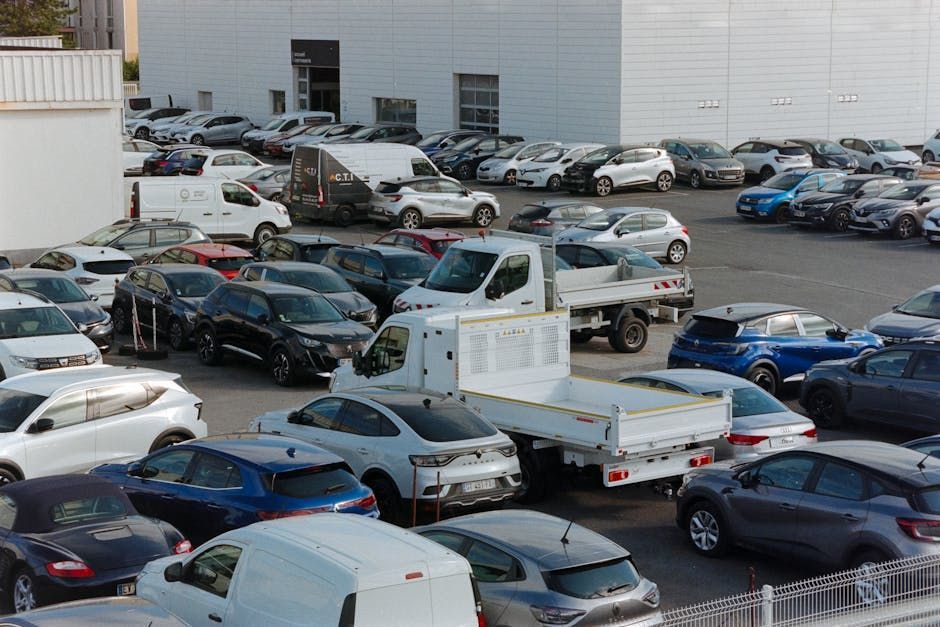
So here is something nobody at any UK airport seems to want to talk about. The long stay car parks at Heathrow, Gatwick, Manchester, Stansted and Birmingham collectively hold more than two hundred thousand cars, the average stay is somewhere north of seven days and you can count the working rapid chargers on the fingers of one hand. Two hundred thousand cars sitting still for a week or more, with absolutely nowhere to plug in.
The maths of it would be amusing if it were not such an obvious miss. If you are a frequent flyer running a Polestar or a Model Y you leave Terminal 5, come back ten days later and find the twelve volt is flat, the high voltage battery sits at sixty percent and you have a four mile crawl to a Gridserve site that probably has a queue. The whole experience screams that someone, somewhere, missed the most obvious commercial real estate in British EV charging.
The dwell time argument is a gift, and the airports are still refusing it
Look at the basic numbers. A supermarket car park has a ninety minute dwell time. A retail park sits at about three hours. A motorway services rapid is in and out in twenty five minutes. The long stay airport park has a dwell time measured in days. Seven, ten, fourteen days for the holiday traffic. For anything below ultra rapid the airport is the perfect environment, a twenty two kilowatt destination charger would refill a Tesla seven times over from arrival to departure.
So why is the rollout so anaemic? Because every airport operator that has costed a proper EV install has come back with a number that begins with a B. Heathrow's long stay alone holds around forty two thousand cars. Stick a seven kilowatt pedestal at every bay, allow for ground works, transformer upgrades, distribution boards, ducting and the DNO queue and you are looking at somewhere between two and four hundred million pounds. For something that does not move passengers through the terminal any faster.
The grid is the second problem, and it is worse than the first
The thing about airports is that the substations were sized for runway lighting, terminal heating, baggage systems and a few hundred staff cars. They were not sized for forty thousand pedestals. The DNO queue for any meaningful upgrade at Heathrow, Gatwick or Stansted is now running at eighteen months minimum and in some boroughs the answer is not eighteen months, it is "build us a new substation and we will see". That is not an EV strategy, that is a capital programme.
This is where the containerised approach changes the picture entirely. PowerMe FreeMe is a charging hub in a forty foot box with up to three megawatt hours of LTO and LFP storage on board. It does not ask the DNO for anything. It does not need a trench. It does not need a transformer pad. It needs a piece of tarmac and a connection, and it will deliver four heads of rapid charging or sixteen heads of fast charging from the moment it is craned off the back of the wagon.
And the commercial model finally makes sense
So here is where the EaaS conversation gets interesting for an airport operator. The bit nobody wants to do is sign off the capex. The bit everyone wants is the revenue line and the ESG narrative. PowerMe funds the lot, deploys the FreeMe units, owns and operates them and pays the airport a profit share for the land. Fifteen percent of every kilowatt hour that leaves a connector, every month, with no capex bill, no DNO grief, no operational staff and no maintenance contracts to write.
For an airport that has been told for three years that EV charging is impossible inside its capex envelope, that is the conversation that gets the FD in the room. And for the short stay and kiss and fly bays, where the dwell time drops to forty minutes and the power demand goes up, the TitanMe Max delivers two hundred kilowatts of rapid charging from a Euro pallet footprint. Same EaaS model, faster turnover, higher revenue per square metre.
What it looks like on the ground
Picture Manchester Airport long stay terminal three. Six FreeMe twenty foot containers spaced across the perimeter, each running twenty four fast charging heads. A hundred and forty four bays with charging, no trenching across the site, no DNO upgrade, deployable in under thirty days from order. Add two TitanMe Max units at the kiss and fly drop off and you have rapid charging for the rush hour. Total airport capex contribution: zero. Profit share over a ten year term sitting in the meaningful eight figures.
This is the conversation we are now having with airport operators in the UK and Europe. The technology is not the bottleneck. The commercial model is not the bottleneck. The bottleneck is whichever airport board moves first.
Get in touch: info@powerme.energy / +44 20 8050 8198 / www.powerme.energy